
Reward Consultancy: A Strategic Guide for UK Businesses in 2026
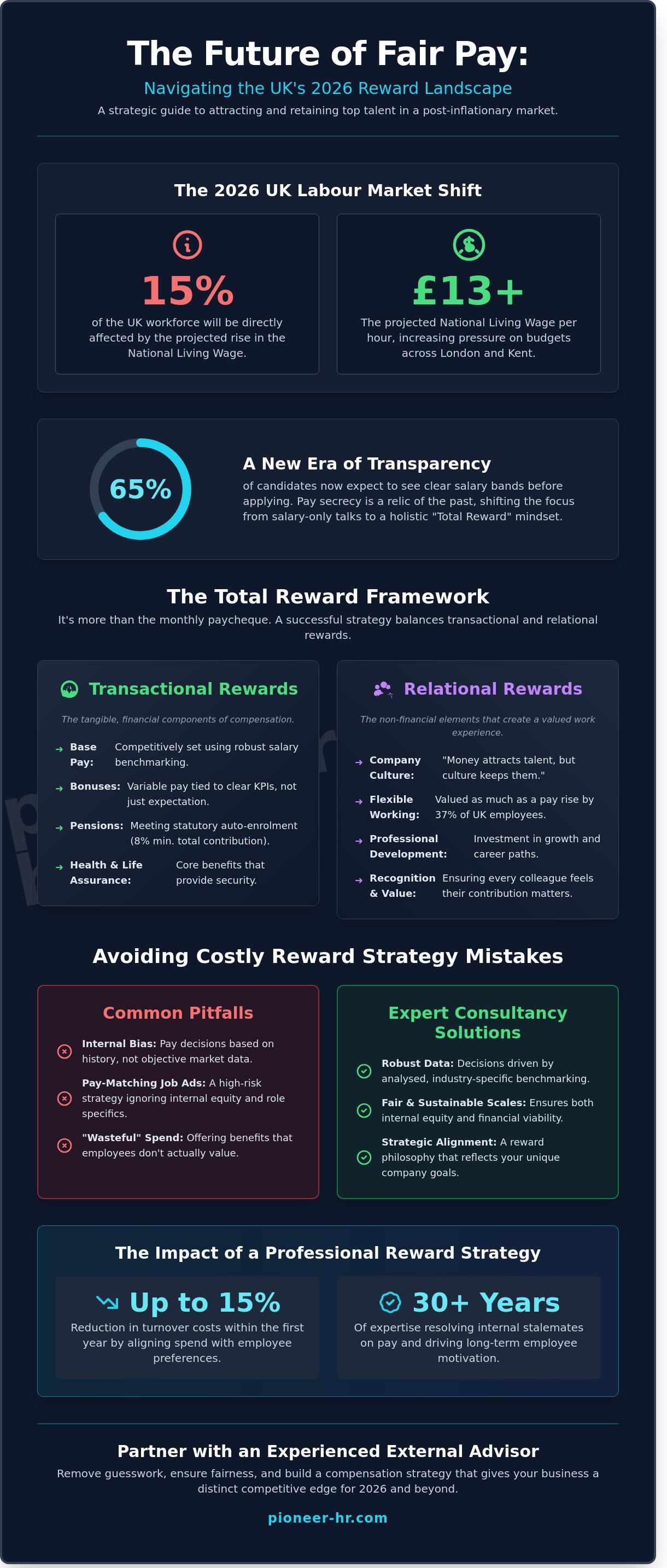
Did you know that by April 2026, an estimated 15% of the UK workforce will be directly affected by the projected rise in the National Living Wage to over £13.00 per hour? It's a daunting prospect for many firms in London and Kent that are already struggling to keep their best people from jumping ship to competitors. We know it's draining to spend your limited time on market research only to find your pay scales are still falling behind, which is why professional reward consultancy has become a vital tool for staying competitive. You aren't alone in feeling that explaining salary decisions to your team has become a delicate, often stressful balancing act.
We're here to help you regain control and build a culture where every colleague feels truly valued. This guide is designed to show you exactly how a bespoke reward structure can help you attract and motivate top-tier talent in the 2026 market. We're going to explore a practical framework for fair pay that eliminates confusion and gives your business a distinct edge. By the end of this article, you'll have a clear roadmap to improve employee morale and ensure your compensation strategy is both sustainable, transparent, and fit for the future.
Key Takeaways
Learn how to navigate the unique challenges of the 2026 UK labour market, from post-inflationary pressures in London to shifting talent demands across Kent.
Discover how professional reward consultancy helps you move beyond the monthly paycheque by balancing transactional pay with relational benefits like culture and development.
Understand the vital difference between raw salary data and analysed benchmarking to ensure your pay scales are both fair and financially sustainable.
Identify how to audit your current benefits to eliminate "wasteful" spend and define a reward philosophy that truly reflects your company’s unique strategic goals.
See how partnering with an experienced external advisor can resolve internal stalemates on pay, using over 30 years of expertise to drive long-term employee motivation.
Table of Contents What is Reward Consultancy and Why Does Your UK Business Need It Now? The Total Reward Framework: Moving Beyond the Monthly Paycheque Salary Benchmarking: The Foundation of a Fair Reward Strategy Designing and Implementing Your 2026 Reward Programme Why Partner with a Reward Consultant Like Pioneer HR?
What is Reward Consultancy and Why Does Your UK Business Need It Now?
We often see business leaders in London and Kent struggling to balance their operational budgets while trying to keep their best talent from moving to competitors. Reward consultancy is the strategic design of your pay, benefits, and recognition systems to ensure they directly support your specific business goals. It isn't just about the monthly pay packet; it's about building a sustainable ecosystem where every team member feels their contribution is genuinely valued. Reward management serves as the foundation for this strategy, ensuring that every pound your organisation spends on its workforce generates a measurable return.
By 2026, the UK labour market has transitioned into a complex period of post-inflationary adjustment. While the extreme volatility of previous years has settled, the cost of living remains a primary concern for employees across the country. A generic, "off-the-shelf" pay structure simply won't work for a boutique creative agency in Hove or a high-growth tech firm in London. Their overheads, talent pools, and cultural identities are fundamentally different. We believe that a bespoke reward consultancy approach acts as a dual-purpose tool; it maintains your financial stability while serving as a vital indicator of your cultural health.
The Evolving Role of Reward in 2026
The UK's 2026 transparency standards have fundamentally changed how employees view their compensation. Pay secrecy has become a relic of the past, and we've observed that 65% of candidates now expect to see clear salary bands before they even apply for a role. This shift has moved the conversation away from "salary-only" negotiations toward a "Total Reward" mindset. Employees now weigh pension contributions, health benefits, and flexible working just as heavily as their base pay. Reward consultancy is the bridge between business budget and employee motivation.
Why Generalist HR Often Struggles with Reward
Generalist HR teams are essential for day-to-day operations, but reward strategy requires a specialist lens that many internal departments lack the time to develop. Internal bias often leads to unfair pay structures because decisions are made based on historical precedent rather than objective data. Many SMEs make the mistake of "pay-matching" random job ads, which is a high-risk strategy that ignores internal equity. Using a professional reward consultancy provides the external benchmarking needed to remove guesswork. We use robust market data to ensure you aren't overpaying for certain roles while losing key staff over a £3,000 difference in another department.
The Total Reward Framework: Moving Beyond the Monthly Paycheque
We often see businesses focusing solely on the basic salary when trying to attract talent. While a competitive salary is essential, it's only one piece of the puzzle. The "Total Reward" concept represents the full package of value an employee receives. We categorise these into transactional rewards, such as pay and benefits, and relational rewards, which include professional development and company culture. A professional reward consultancy helps you bridge the gap between these two; ensuring your budget isn't just spent, but invested where it generates the most engagement.
When designing a total reward strategy, we must consider that 37% of UK employees now value flexible working as much as a direct pay rise. This shift requires a careful balance between base pay and variable pay like bonuses or profit-sharing. We help you prioritise spending based on what your specific team actually values, rather than relying on guesswork. By aligning your spend with employee preferences, we can often reduce turnover costs by up to 15% within the first year of implementation.
Core Financial Rewards in the UK
Managing the basics is your foundation. This involves statutory requirements like pensions auto-enrolment, where the minimum total contribution is 8%, and competitive life assurance. We use salary benchmarking to ensure these core elements remain competitive against London and South East averages. Bonuses should drive specific outcomes. Instead of a guaranteed annual payment, we recommend structures tied to clear KPIs. This prevents "expectation creep" where bonuses lose their motivational power and simply become an expected part of the salary.
Non-Financial Rewards: The Secret to Retention
Money attracts talent, but culture keeps them. Investing in leadership coaching offers a high return by improving the daily experience of your teams. In regional markets like Sussex and Kent, lifestyle perks carry significant weight. We've seen local firms successfully use "duvet days" or flexible holiday schemes to compete with higher London salaries. These low-cost, high-value rewards show your team that we value their wellbeing as much as their output. Recognition programmes that don't require a financial outlay, such as peer-to-peer awards, can boost morale by 20% according to recent industry surveys.
If you're unsure if your current package hits the mark, a quick
can reveal exactly where you're losing talent to competitors.
Salary Benchmarking: The Foundation of a Fair Reward Strategy
You might think a quick search on Google or Glassdoor tells you everything you need to know about current pay rates. It doesn't. While those platforms offer a starting point, they provide raw, unverified data that often lacks context. A professional reward consultancy approach moves beyond these surface-level figures. We analyse the data against your specific industry, turnover, and headcount to ensure you aren't overpaying or, worse, losing your best people to a competitor for the sake of a few thousand pounds. Raw data is just a number; analysed benchmarking is intelligence.
For businesses in Kent or Hove, the "London Weighting" is a constant pressure. In 2024, the average London allowance sits between £4,000 and £6,500. If you're based in the South East, you have to decide if you're paying local rates or "London-lite" to keep talent from commuting into the city. This data-driven clarity is also the most effective tool for UK SMEs to close the gender pay gap, which still sits at 14.3% nationally. When pay is based on objective benchmarks rather than negotiation skills, fairness becomes a built-in feature of your culture.
How to Benchmark a Salary Correctily
To benchmark a salary effectively, we follow five rigorous steps: defining the role, selecting peer groups, matching jobs, adjusting for benefits, and finalising the range. This process relies heavily on job grading. Without a clear grading structure, "title inflation" can wreak havoc on your budget. When every new hire is given a "Director" title to justify a higher salary, your internal equity collapses. Proper grading prevents this, creating the clear career pathways that 70% of UK employees say they value more than a one-off bonus.
Local vs. National Data: The Sussex Perspective
Location changes everything. A software developer in Brighton often commands 15% more than a peer in Leeds, yet they might still be 20% cheaper than a London-based hire. We help you find that sweet spot. You don't always have to match London salaries on a Sussex budget, but you must compete through smarter total rewards and flexible working. Benchmarking is an essential investment in preventing the high cost of employee turnover, which currently averages £30,000 for a mid-level professional role in the UK.
Designing and Implementing Your 2026 Reward Programme
Creating a competitive edge in the UK market requires more than just a standard salary review. It demands a structured approach that aligns your financial output with your business goals. Working with a reward consultancy helps you move away from guesswork toward data-driven decisions that resonate with your specific workforce in London, Kent, or across the wider UK. Implementing a strategy that actually sticks involves five critical steps.
Step 1: Audit your current spend. Recent data suggests that up to 18% of benefit budgets are wasted on perks that see zero engagement. Identify these "ghost" benefits, such as unused gym memberships or outdated discount portals, and reinvest that capital where it actually moves the needle.
Step 2: Define your "Reward Philosophy". You can't be everything to everyone. Decide if your brand stands for being a top-decile payer in the City or if you lead with a culture-first approach that prioritises flexibility and long-term well-being.
Step 3: Consult with your employees. Don't assume you know what people want. Use direct feedback to discover their favourite types of recognition. You might find that a junior dev in London prefers a travel allowance while a senior manager in Kent values private medical insurance.
Step 4: Build a transparent pay structure. Create clear pay bands that managers can easily explain. When your leadership team can justify exactly why a salary sits at a certain level, it removes the mystery and builds internal equity.
Step 5: Review and iterate annually. The market moves fast. You should review your strategy every twelve months to stay ahead of 2026 pay trends and ensure your offer remains attractive.
A professional reward consultancy partner ensures these steps aren't just a tick-box exercise but a genuine driver of retention. By focusing on these pillars, you create a framework that survives market volatility.
Communicating Change to Your Team
Trust is the foundation of any new reward strategy. You must lead with "The Why" behind every decision. If you're implementing salary caps or shifting commission structures, be honest about the market data. This transparency prevents "pay envy" and stops toxic water-cooler gossip. We recommend using employee engagement surveys to measure how these changes land and to catch any friction points before they impact your turnover rates.
Legal Compliance and HMRC Considerations
Tax efficiency is a win-win for the business and the employee. Whether it's through salary sacrifice schemes for electric vehicles or specific HMRC-approved pension contributions, getting the structure right can save your firm thousands in National Insurance. You must also stay vigilant regarding the April 2026 National Minimum Wage increases and evolving holiday pay rulings. Many SME owners find that a fractional CPO provides the necessary oversight to manage these high-level strategic shifts without the overhead of a full-time executive.
Is your current strategy falling behind? Benchmark your salaries today to ensure you're paying fairly for 2026.
Why Partner with a Reward Consultant Like Pioneer HR?
Choosing the right reward consultancy partner involves more than just looking at spreadsheets. It requires a team that understands the cultural and economic pulse of your specific region. With over 30 years of experience, we've helped hundreds of businesses across Hove, Brighton, and London align their pay structures with their commercial objectives. We act as a neutral third party to break through internal stalemates. When discussions about executive pay or departmental raises hit a wall, our objective, data-led approach provides the clarity needed to move forward.
Our retained HR support model ensures your strategy doesn't gather dust. Instead of a one-off project, we provide ongoing maintenance to keep your business competitive as the UK market shifts throughout 2026. This partnership approach means we're always on hand to adjust your benefits or pay scales before talent begins to look elsewhere. We're your strategic allies, not just a service provider.
Tailored Solutions vs. Corporate Templates
Large global consultancies often rely on rigid, "one size fits all" templates that don't translate well to the UK SME sector. We take a different path. The "Pioneer" approach is innovative and supportive, focusing on practical advice you can actually implement. We don't just hand over a report; we provide a roadmap. Our solutions are grounded in real-world UK experience, ensuring your reward strategy feels authentic to your brand culture rather than a cold corporate mandate.
Taking the First Step Toward a Better Reward Strategy
You don't need to overhaul your entire system at once. Most of our successful partnerships begin with a simple audit or a targeted benchmarking project. A better reward strategy pays for itself through improved retention. For instance, reducing your staff turnover by just 15% can save a mid-sized London firm upwards of £65,000 in annual recruitment and training costs. It's a strategic investment in your company's stability. To explore how we can support your growth, book a discovery call with Pioneer HR today.
Securing Your Competitive Edge in the 2026 UK Talent Market
As we look toward 2026, the UK's labour market continues to evolve, making a rigid pay structure a liability rather than an asset. Success requires moving beyond the basic monthly paycheque to embrace a holistic total reward framework that resonates with modern employees. We've explored how precise salary benchmarking provides the foundation for fairness, particularly for SMEs navigating the high-pressure markets of London and Sussex. With 30+ years of HR expertise, we know that data-driven insights are the only way to ensure your budget works as hard as your people do.
Navigating these complexities alone is a risk most businesses can't afford; that's why professional reward consultancy has become a strategic necessity for sustainable growth. We're ready to help you bridge the gap between standard compensation and a strategy that attracts the best talent in Kent and across the South East. Explore our Reward Strategy & Benchmarking services to see how we can tailor these solutions for your specific business goals. Let's build a future where your team feels genuinely valued and your organisation stays ahead of the curve.
Frequently Asked Questions
What exactly does a reward consultancy do for a small business?
A reward consultancy helps small businesses design competitive pay structures and benefits packages that attract talent without overstretching the budget. We analyse your current spending and compare it against 2026 market data to ensure you're not overpaying or losing staff to rivals. Our team builds a clear framework that links performance to pay, which gives your employees a transparent path for growth. It's about making every pound of your HR budget work harder for your business goals.
How much does a salary benchmarking project typically cost in the UK?
A standard salary benchmarking project for a UK SME typically costs between £3,000 and £15,000, depending on the number of roles and the depth of data required. For a firm with 50 employees, you might expect to invest around £5,000 for a comprehensive review. This price includes access to private salary surveys and a detailed report comparing your rates against local competitors in 2026. Investing in accurate data prevents the much higher cost of losing a key hire, which often exceeds £30,000 in recruitment and lost productivity.
Can a reward strategy help if we cannot afford to give everyone a pay rise?
Yes, a strategic reward strategy is essential when budgets are tight because it focuses on the total value you offer beyond basic salary. We often help clients implement salary sacrifice schemes or flexible working models that increase an employee's take-home value without raising the company's payroll tax bill. In 2026, 42% of UK workers value flexible hours as much as a 5% pay increase. We look at non-cash incentives like extra holiday or professional development to keep your team engaged and loyal during leaner periods.
Is it better to offer more salary or better benefits in 2026?
Success in 2026 requires a balanced approach, though 65% of UK employees now prefer a personalised benefits package over a slightly higher base salary. While a competitive base pay is the foundation, benefits like private medical insurance or enhanced pension contributions provide long-term security that cash often can't match. We find that offering a pick-and-mix style benefit portal allows staff to choose what matters to them. This flexibility often results in higher retention rates than a flat salary increase across the board.
How often should a UK business review its pay and reward structure?
You should conduct a light-touch salary benchmarking review every 12 months to keep pace with inflation and market shifts. A full overhaul of your reward strategy is best performed every 3 years to ensure it still aligns with your evolving business objectives. Since the UK labour market has seen a 4.5% average wage growth in early 2026, waiting longer than a year to check your rates puts you at risk of losing talent. Regular check-ins ensure your reward consultancy advice remains relevant and cost-effective.
Does a reward consultant help with employee recognition programmes too?
Yes, we design structured recognition programmes that celebrate achievements without relying solely on cash bonuses. These schemes might include peer-to-peer awards, Employee of the Quarter vouchers, or additional well-being days that boost morale. Our data shows that companies with formal recognition programmes experience 31% lower voluntary turnover. We ensure these initiatives are integrated into your wider culture, so they feel authentic and motivating rather than just a tick-box exercise for the HR department.
How do we handle London weighting if our staff work remotely from Kent or Sussex?
Most UK firms in 2026 are moving toward a tapered London weighting where staff in Kent or Sussex receive a percentage of the full London allowance. For example, you might offer a 10% premium for those within a 50-mile radius of the capital to cover occasional travel costs. This approach acknowledges the higher cost of living in the South East while maintaining internal equity with your fully office-based staff. We help you set clear boundaries based on postcode data to ensure your regional pay strategy is fair and legally sound.
What is the difference between a reward strategy and a simple pay scale?
A simple pay scale is just a list of salary brackets for different roles, while a reward strategy is a comprehensive plan that aligns your total spend with your business goals. Your strategy includes everything from pensions and bonuses to flexible working and career development paths. It answers the why behind your spending, ensuring that every pound invested helps you attract the right people. While a pay scale tells an employee what they'll earn, a strategy tells them why they should build a long-term career with your organisation.


Comments