
How to Manage Poor Performance and Improve Staff Results
To understand how to manage poor performance in the UK, first identify the gap between the employee’s work and the standards expected in their role. Raise concerns promptly, usually informally unless the issue is serious, and ask what may be affecting performance before deciding what to do next. A performance improvement plan is not a legal requirement, but it can set clear objectives, a reasonable timeframe and the support needed to improve.
Addressing underperformance can be difficult, particularly when you need to protect team results while treating the employee fairly. A calm, structured conversation clarifies expectations and gives the employee a chance to explain what is getting in the way. This article covers how to prepare for an informal meeting, take early action and create a practical performance improvement plan, including how to review progress and explain what may happen if performance does not improve.
Table of Contents
Performance improvement plans
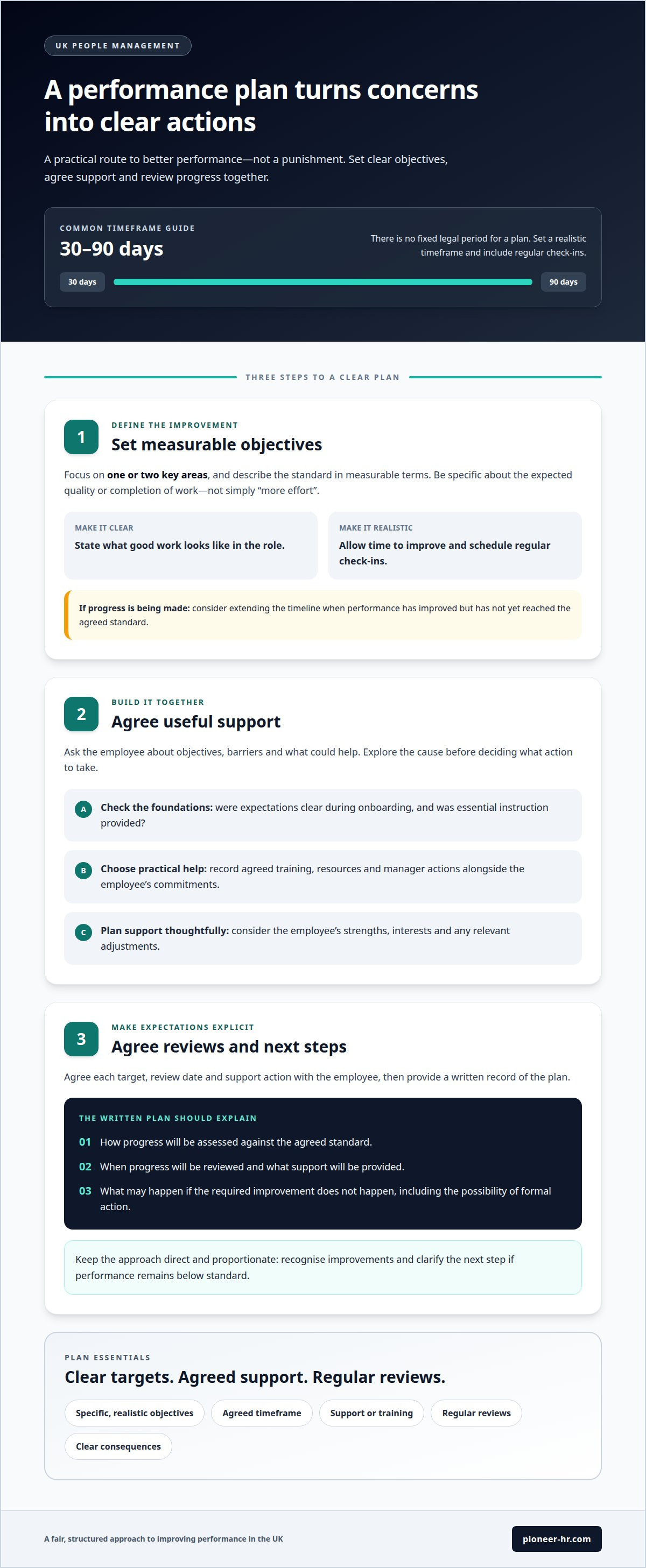
A performance improvement plan turns concerns into clear actions, support and review points. Use it as a practical route to better performance, not as a punishment.
Set improvement objectives and timescalesChoose one or two key areas, then describe the required standard in measurable terms. For example, specify the expected quality or completion of work rather than asking for “more effort”. Set a realistic timeframe: there’s no fixed legal period for a plan, and employers commonly use 30 to 90 days as a guide. Include regular check-ins, and consider extending the timeline if performance improves but hasn’t yet reached the agreed standard.
Create the plan collaborativelyAsk the employee to discuss the objectives, barriers and support that could help them improve. Record agreed training, resources and manager actions alongside the employee’s commitments. Check whether expectations were clear during onboarding, whether essential instruction was provided, and whether the employee’s strengths or interests could be better used. The Senior Civil Service poor-performance policy states that it complies with the Equality Act 2010, according to Cabinet Office; consider relevant adjustments when planning support.
Agree the plan and consequencesAgree each target, review date and support action with the employee, then provide a written record of the plan. Explain what may follow if the required improvement does not happen, including the possibility of formal action. Keep the approach direct and proportionate: state how progress will be assessed, recognise improvements and clarify the next step if performance remains below standard.
A UK performance improvement plan should include specific, realistic objectives, an agreed timeframe, support or training, regular reviews and the consequences of not improving. Certain automatically unfair dismissal and Equality Act 2010 discrimination claims don’t require two years’ service, according to The National Archives. Applicable tribunal time limits and costs depend on the claim type and circumstances, including whether legal representation is used.
Preparing for an informal performance meeting
Prepare a focused conversation before performance issues become harder to resolve. Gather specific examples, clarify the expected standard and consider what support could help the employee meet it.
Start with early informal conversationsArrange a private discussion promptly when you notice a pattern, such as missed deadlines or repeated errors. Explain the concern with a specific example, then invite the employee to describe what happened. A conduct concern should usually be discussed informally first, unless it is serious enough to require a formal disciplinary procedure. Keep a factual note of the discussion and agreed actions.Use Situation, Behaviour, Impact to keep feedback constructive: describe when an incident happened, what the employee did and the effect it had. For example, explain how a late report delayed a colleague’s work. Avoid judging personality and clarify the expected standard. This can help distinguish a capability issue, such as a need for training, from possible misconduct.
Offer support before a performance reviewTell the employee in advance why you are meeting and which examples you plan to discuss, so they have time to prepare. There is no single notice period for every informal conversation; allow enough time for a considered response. Before the review, identify practical support, such as clearer instructions, training, suitable resources or regular check-ins.Ask whether personal challenges, workload, unclear expectations or workplace conflict may be affecting performance. Listen without assuming the cause, and agree immediate support that fits the issue. Give the employee the opportunity to explain their perspective and raise training needs. Record the concerns, actions, improvement timeframe and date of the next meeting.
Keep early action proportionate: an informal conversation is not automatically a disciplinary hearing. If the evidence points to serious conduct concerns, follow the appropriate formal process instead. In either case, record what was discussed, what each person will do and when you will review progress. A clear record supports consistent follow-up and helps everyone understand the expected standard.
Preliminary action before formal procedures
Before formal action, investigate the reasons for poor performance and identify practical support. Move to a formal procedure only after reviewing the evidence, relevant policies and the employee’s circumstances.
Review internal performance proceduresRead the organisation’s performance policy and follow its stages, records and decision-making requirements. Check whether the issue concerns capability, conduct or both; don’t treat a skills gap as misconduct without examining the circumstances. UK employers should investigate before deciding. If concerns continue despite support, explain the evidence and allow the employee to respond before formal action. Under section 98 of the Employment Rights Act 1996, dismissal may be fair for poor performance if the employer acted reasonably.
Consider health conditions and adjustmentsAsk whether illness, stress, disability or another health condition may affect the employee’s work. Consider appropriate support or changes before escalating concerns, including adjustments to duties, shifts, equipment or time for written tasks. If apparent misconduct could relate to a disability, consider whether reasonable adjustments are needed before disciplinary action. Dismissal because illness prevents someone from doing their job should be a last resort; assess the circumstances and available support first.
Address employee rights and challengesAt a formal capability meeting, an employee has the right to be accompanied by a fellow worker, trade union representative or union official under section 10 of the Employment Relations Act 1999. Give them a chance to explain their position and appeal a warning or decision through the organisation’s procedure. If performance remains below standard, a fair process may lead to dismissal; section 98(4) asks whether the employer acted reasonably in treating capability as sufficient reason.Keep evidence, reasons and decisions on record. An employee can challenge a warning or dismissal by using the internal appeal process. Under the Acas Code of Practice, an employment tribunal may increase compensation by up to 25% if an employer unreasonably fails to follow the Code, according to Acas.
Managing poor performance
A consistent approach to how we manage poor performance in the UK connects individual expectations with team outcomes. Address the work itself while recognising how sustained underperformance can affect colleagues’ morale and productivity.
Address poor performanceLook beyond missed targets to understand what could help the employee contribute more effectively. Invite them to reflect on their performance and identify strengths or interests that could be better aligned with their work. Reduced motivation can affect results even when someone has the necessary skills, so consider whether development opportunities or clearer communication could help restore engagement.Recognise improvements as they happen, even if every concern has not yet been resolved. Balanced feedback helps the employee see which changes are making a positive difference.
Document performance concernsUse performance information to distinguish a recurring pattern from an isolated setback. Compare outcomes across different tasks or periods, then consider whether the same difficulty persists or circumstances have changed. This gives discussions a clearer focus and helps managers assess whether progress is moving in the right direction.Managers considering how to manage poor performance in the UK can use this analysis to recognise sustained improvement and identify useful further development.
Review progress with the employee at agreed check-ins, and adjust the approach if circumstances or work requirements change. If improvement is sustained, acknowledge the contribution; if difficulties continue, identify the remaining gap and agree the next constructive action. A measured review keeps attention on future performance rather than letting one setback define the employee’s overall contribution.
Review your approach to managing performance consistently when recurring concerns suggest the process needs closer attention.
Address concerns promptly and make the expected standards clear. Invite the employee to assess their own performance and explain why they may be finding the work difficult. This can help establish whether stress, mental health concerns, disability, medical conditions, workplace issues, or a lack of training or support may be contributing.
Keep communication open and empathetic, and offer support that may help reduce stress or anxiety. Explain the effect of poor performance on morale and productivity without blaming the employee or acting vindictively. Reduced motivation may be a factor rather than lack of skill, so a constructive discussion can help identify appropriate support.
Pioneer HR: Management Training
Pioneer HR’s Management Training can help managers handle performance conversations with greater consistency and confidence. It helps managers prepare clear feedback, distinguish capability concerns from conduct issues, and hold constructive discussions focused on improvement.
If performance concerns recur across teams, Pioneer HR’s Retained HR Services can help your organisation apply people processes more consistently. Support can help managers prepare for difficult conversations and apply internal procedures. Building these skills helps managers address concerns earlier and make clearer, fairer decisions.
Contact Pioneer HR to discuss management training and the support that would suit your organisation.
Build consistent management practice
Knowing how to manage poor performance in the UK is only the starting point. Make constructive, consistent management part of everyday working life, so expectations are understood before concerns escalate and employees know how to seek support.
Consider whether managers have the confidence and organisational backing to apply your approach consistently. Pioneer HR provides Retained HR Services, Salary Benchmarking and Reward and Benefits Review to help employers consider the wider people practices that shape performance and engagement. The right next step depends on the challenges your organisation faces and the support its managers need.
We can discuss the priorities you want to address and how they connect to your people strategy. Contact Pioneer HR to explore a practical next step for your organisation.
Frequently Asked Questions
What is managing poor performance?
Managing poor performance means identifying where an employee’s work falls short of agreed expectations and responding in a fair, structured way. For example, if a role requires accurate customer records and entries repeatedly contain errors, the manager can clarify the standard, explore what is causing the mistakes and agree how progress will be assessed. The aim is to help the employee improve while maintaining effective work.
What counts as poor performance at work in the UK?
Poor performance means work consistently falls below the reasonable requirements of the employee’s role. Examples include missed deadlines, repeated errors, incomplete tasks or unmet service standards. One mistake does not automatically establish a pattern; consider the task’s complexity, the instructions given and the circumstances at the time. Compare the work with clear role expectations, not another employee’s individual working style.
What are the steps in a UK capability procedure for poor performance?
A capability procedure generally moves from identifying and discussing concerns to providing support and a reasonable opportunity to improve. If progress remains insufficient, the employer may move through formal stages under its policy, with appropriate warnings, reviews and an opportunity to appeal decisions. Dismissal should be a last resort after a fair process. The precise stages depend on the employer’s procedure and the employee’s circumstances.


Comments