
Unauthorised absence disciplinary procedure and dismissal
Yes, an employee can be dismissed for unauthorised absence, but dismissal is not automatic: the employer must assess the facts and whether the decision would be fair. A sound unauthorised absence disciplinary procedure in the UK includes reasonable attempts to contact the employee, a fair investigation and a genuine opportunity for them to explain before a decision is made. Depending on the circumstances, support or a different response may be more appropriate.
An employee failing to arrive can create immediate operational pressure, particularly when cover or safety is affected. It is understandable to want a clear response, but treating silence as proof of misconduct may overlook illness, an emergency or a communication problem. A calm, consistent approach gives the employee a chance to explain and helps the employer reach a considered decision.
This article explains what may count as unauthorised absence, how employers can manage the disciplinary process and when dismissal may be fair. It also covers practical steps, from making contact and keeping records to considering the employee’s explanation and choosing an appropriate outcome.
Table of Contents
Can an employee be dismissed while absent?
An employee can be dismissed for unauthorised absence, but absence alone doesn’t make dismissal fair. Treating sickness or disability-related absence as misconduct without considering its cause and support needs may expose the employer to a discrimination claim under the Equality Act 2010.
Contacting an Absent Employee
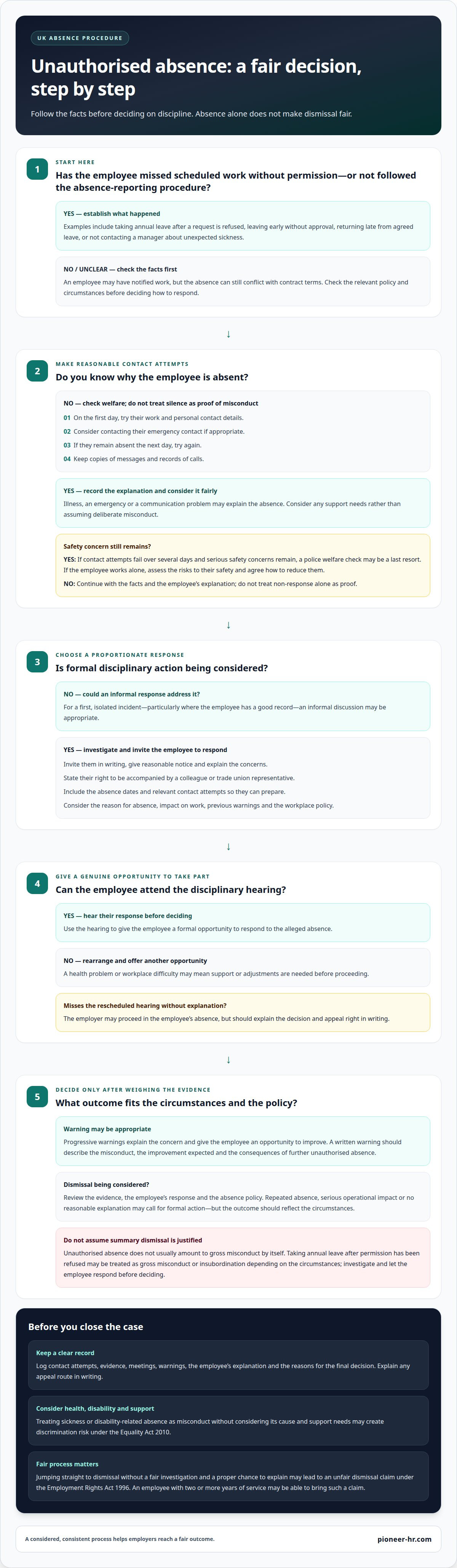
When an employee is absent, make reasonable attempts to establish why they have not attended work and record each attempt. On the first day, try their work and personal contact details, then consider contacting their emergency contact if appropriate. If they remain absent the next day, try again. These steps help check their welfare before disciplinary action and may identify an emergency or need for support.
Keep copies of messages and records of calls, and do not assume that silence proves misconduct. If contact attempts fail over several days and serious safety concerns remain, a police welfare check may be a last resort. If the employee works alone, assess the risks to their safety and agree how to reduce them.
Hearings During an Employee’s Absence
A disciplinary hearing gives the employee a formal opportunity to respond to the alleged absence before an outcome is decided. Invite them in writing, give reasonable notice, explain the concerns and state their right to be accompanied by a colleague or trade union representative. Include the absence dates and relevant contact attempts so they can understand the case and prepare their response.
If the employee cannot attend, rearrange the hearing and give them another opportunity to take part. If they miss the rescheduled hearing without explanation, the employer may proceed in their absence, but should explain the decision and appeal right in writing. A health problem or workplace difficulty may mean support or adjustments are needed before proceeding.
Dismissal Claims and Tribunal Risk
Dismissal claims can arise when an employer reaches an outcome without a fair investigation or a proper chance for the employee to explain. According to UK legislation, jumping straight to dismissal without that opportunity may lead to an unfair dismissal claim under the Employment Rights Act 1996. An employee with two or more years of service may be able to bring such a claim.
Under the Equality Act 2010, UK legislation also allows for a discrimination claim if absence relates to a protected characteristic or reasonable adjustments weren’t sufficiently considered. For example, treating disability-related absence as deliberate misconduct without examining relevant support needs can create legal risk. Record the evidence, the employee’s explanation and the reasons for the final decision.
Dismissal for unauthorised absence
Unauthorised absence can lead to disciplinary action, but dismissal should follow a fair process and reflect the circumstances. Managers should consider the employee’s reason, the impact on work and any previous warnings.
Disciplinary Sanctions and Dismissal
Disciplinary sanctions are formal consequences for misconduct, ranging from a warning to dismissal. A proportionate outcome helps managers respond consistently and explain their decision.
For a first, isolated incident, an informal discussion may be appropriate, particularly if the employee has a good record. Repeated absence, serious operational impact or no reasonable explanation may call for formal action. If dismissal is being considered, the employer should review the evidence, the employee’s response and its own absence policy before deciding.
Warnings Before Dismissal
Progressive warnings notify an employee of the concern and give them an opportunity to improve before dismissal is considered. A written warning should describe the misconduct, the improvement expected and the consequences of further unauthorised absence.
Managers should keep dated records of verbal and written warnings, including what was discussed. A first and final written warning may be appropriate if the misconduct is serious enough, but the employee should still have a chance to explain before it is issued. Any further incidents can then be assessed against the active warning and the policy.
Unauthorised absence does not usually amount to gross misconduct by itself, so summary dismissal should not be assumed to be justified. Taking annual leave after permission has been refused may be treated as gross misconduct or insubordination, depending on the circumstances. Even then, investigate and let the employee respond before deciding.
Can an employer deduct pay for unauthorised absence? An employer may consider a contractual provision that authorises deductions for unauthorised leave. Check the contract terms and apply them consistently, rather than assuming a deduction is permitted in every case.
If an employee remains absent without leave, managers should distinguish the missed working time from the disciplinary outcome. A fair process may lead to dismissal with notice after appropriate warnings. Keep the final decision and its reasons on record, and explain any appeal route in writing.
What is classed as unauthorised absence from work?
Unauthorised absence includes missing scheduled work without permission or failing to follow the employer’s absence-reporting procedure. Examples include taking annual leave after a request is refused, leaving early without approval, returning late from agreed leave or failing to contact a manager about unexpected sickness. An employee may have notified work, but the absence can still conflict with their contract terms.
An absence policy should explain how employees report sickness or emergencies, who they must contact and when they should provide updates. It should also clarify how to communicate an expected return date, what happens if annual leave is declined, and whether a return-to-work conversation will take place. Clear steps help employees understand expectations before an incident occurs.
For example, an employee who cannot attend work should follow the stated reporting route rather than rely on a message to an unavailable colleague. The policy can also explain possible disciplinary action for unauthorised leave and how managers record repeated lateness. Keep the procedure consistent with employment contracts and the disciplinary policy, and make it accessible in staff handbooks.
A return-to-work interview gives the manager and employee a structured opportunity to establish what happened during an absence. Ask when the employee was unable to attend, why they did not follow the reporting procedure, and whether they have information that explains the situation. If they say sickness prevented attendance, consider whether they followed the sickness procedure and provide any evidence required by workplace policy.
Record the employee’s explanation, relevant dates and any supporting information, then decide whether the absence was authorised or further action is appropriate. A one-off reporting mistake by an employee with a good record may call for an informal discussion. Repeated unexplained absences or taking leave without permission may require a formal warning under the disciplinary policy. Distinguish illness-related absence from deliberate non-attendance, and discuss support if circumstances point to an underlying difficulty.
Best practice for managing unauthorised absence
Investigate by checking for planned leave, reviewing the absence policy and inviting the employee to explain. A fair unauthorised absence disciplinary procedure in the UK helps managers consider mitigating circumstances before deciding whether formal action is appropriate.
Investigating Unauthorised Absence
An investigation establishes what happened and whether the employee followed workplace procedures. It helps distinguish a misunderstanding from repeated misconduct and gives managers a sound basis for their decision.
Allow an initial response period of 24-48 hours, then compare the employee’s account with rotas, messages and absence records. Keep evidence and meeting notes securely, restrict access to people involved, and observe data protection and confidentiality requirements. If the employee works alone, assess safety concerns separately from the conduct issue.
Considering Mitigating Circumstances
Mitigating circumstances are facts that help explain an absence or affect the appropriate response. Considering them helps managers distinguish deliberate misconduct from a missed shift caused by difficult circumstances.
Ask whether sickness, a family emergency or another difficulty affected attendance or reporting. Consider the employee’s record, the reason for the absence and its impact on colleagues. If health affects their ability to work, explore support and practical adjustments before treating the matter as misconduct.
Keep the response proportionate. A one-off failure to follow a reporting procedure may be resolved through an informal conversation, while repeated unexplained absence may call for formal action. Apply the same policy consistently, but assess each employee’s circumstances individually. Record why a warning or other outcome was appropriate.
Unauthorised absence alone will not usually amount to gross misconduct. If an employee may intend to take leave after permission has been refused, restate the decision and consequences in writing. This gives them a clear opportunity to reconsider and creates a record of the instruction.
Managers should review attendance patterns and discuss recurring incidents promptly, rather than waiting until they become more serious. For UK employers, applying an unauthorised absence disciplinary procedure consistently can help keep discussions measured and decisions properly documented. Keep the final outcome and reasoning on file, ensuring the response addresses the absence and recognises any support the employee may need.
Pioneer HR: Retained HR Support
Pioneer HR’s Retained HR Services can help UK employers establish a consistent approach to attendance, absence policies and people management. Ongoing HR support can be useful when managers need help handling recurring absence concerns, applying workplace procedures consistently or reviewing how attendance issues affect the wider team.
With a clear process in place, managers can respond more confidently while considering operational needs and individual circumstances. If absence patterns point to wider engagement challenges, Pioneer HR’s Employee Engagement Surveys can help employers understand employee experience and identify areas that need attention.
For organisations seeking broader strategic people leadership, a Fractional Chief People Officer can provide senior-level support. Contact Pioneer HR to discuss the HR support that best fits your organisation’s needs.
Build a more consistent approach to attendance
Use this issue as a prompt to strengthen how managers communicate expectations, record concerns and support employees. A consistent unauthorised absence disciplinary procedure for UK employers can make decisions clearer across teams while leaving room to consider individual circumstances. Review how your current approach works in practice, including whether managers feel confident handling sensitive conversations and applying policies fairly.
Pioneer HR can support this broader people-management work through Retained HR Services. Its Salary Benchmarking and Reward and Benefits Review services can also help employers address wider workforce priorities as they review their people practices. The right support depends on the organisation’s needs and the challenges it is working through.
If you’re looking to develop a more considered approach to people management, contact Pioneer HR for advice. A thoughtful, consistent process can help managers handle attendance concerns with greater clarity and care.
Frequently Asked Questions
Is unauthorised absence a disciplinary matter?
Yes, an employer may treat unauthorised absence as a disciplinary matter, but the reason and circumstances matter. For example, failing to report an absence as required may be different from deliberately missing a shift after leave was refused. Managers should assess the employee’s explanation against the relevant policy and apply the same standards consistently in comparable cases.
When is Absence Authorised?
Absence is authorised when it is covered by approved leave, an applicable entitlement or the employer’s reporting process. Examples can include agreed annual leave, compassionate leave, jury service, family-related leave, unpaid leave or public duties. Sickness may also be handled under the employer’s sickness procedure. Employees should follow the required notification steps, as approval and reporting expectations can differ by absence type.
Can I Dismiss Someone Straight Away For Going AWOL?
Usually, an employer should not dismiss someone immediately just because they have gone AWOL. First establish what happened, make reasonable efforts to contact them and allow them to respond. If the facts indicate gross misconduct, dismissal without notice may be considered, but an investigation and an opportunity to answer the allegation remain important. The employer should explain the outcome and provide an appeal route.
Can You Be Sacked Without A Written Warning In The UK?
Yes, dismissal without an earlier written warning may be possible in serious cases, but it depends on the conduct and the fairness of the process. An employer may consider a first and final warning where misconduct is serious, or dismissal after investigating suspected gross misconduct. For less serious conduct, a warning and a clear opportunity to improve may be more proportionate.
Is unauthorised absence gross misconduct?
Unauthorised absence is not usually gross misconduct by itself. The employer should assess the conduct, its impact and the employee’s explanation rather than rely only on the label used in a policy. Taking leave after a holiday request was refused could be treated more seriously, depending on the circumstances. Even where gross misconduct is suspected, investigate and hear the employee’s response before deciding.
What Documentation Should Employers Keep?
Keep records showing how the matter was handled and why the outcome was reached. These can include the relevant policy, rota or attendance record, contact attempts, the employee’s explanation and supporting evidence, meeting notes, correspondence, warnings and the final decision. Record dates and actions clearly, restrict access to those who need the information, and handle personal details confidentially.



Comments